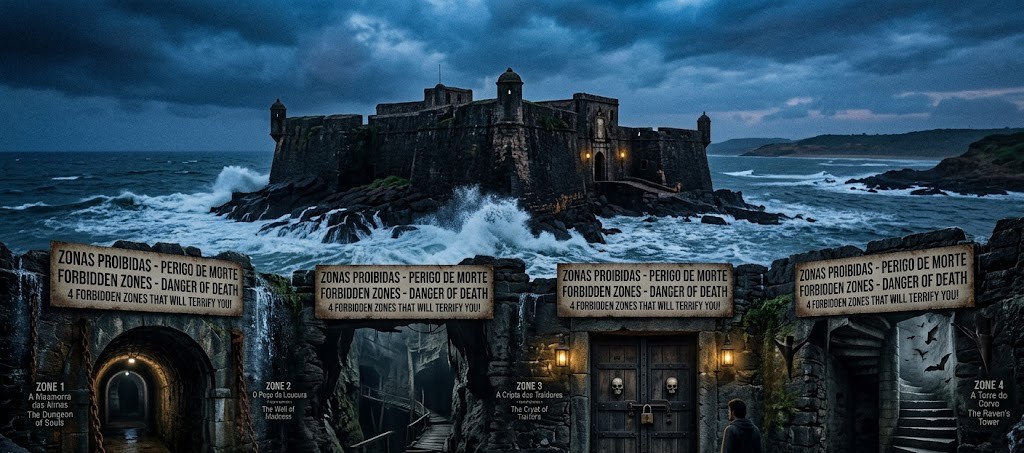
Discover 7 Powerful Diu History Secrets & Mistakes, from ancient kingdoms to Portuguese rule and modern heritage.
Thank you for reading this post, don't forget to subscribe!
7 Powerful Diu History Secrets & Mistakes
Diu’s history is defined by its strategic coastal position on the Arabian Sea. For centuries, major powers including the Mauryas, the Sultans of Gujarat, the Ottoman Empire, and the Portuguese fought fiercely over control of this tiny outpost.
- Ancient Mythological Beginnings: Long before European colonial powers arrived, Diu was referenced in ancient Puranic texts as Jalandhar Kshetra.
- Crucial Maritime Crossroads: Positioned at the mouth of the Gulf of Khambhat, Diu controlled key spice and textile trading routes between India, the Red Sea, and the Persian Gulf.
- The Colonial Era: Controlled by Portugal for over 400 years, Diu remained an isolated enclave until Operation Vijay integrated it into India in 1961.
Understanding 7 Powerful Diu History Secrets & Mistakes provides a clear view into how strategic decisions shaped the region’s trajectory.
Secret 1: The Puranic Roots and Ancient Mauryan Rule
The earliest recorded history of Diu traces back to 322 BC during the expansion of the Mauryan Empire. According to local legend and the Puranas, the island was originally known as Jalandhar Kshetra, named after a powerful demon king defeated by Lord Vishnu.
Emperor Ashoka’s grandson, Samprati, later promoted Jainism across the region, building some of the island’s earliest recorded temples. Understanding these ancient origins provides a foundation for examining 7 Powerful Diu History Secrets & Mistakes.
Secret 2: The Decisive 1509 Battle of Diu
In February 1509, one of the most critical naval battles in world history took place off the shores of Diu. The battle pitted the Portuguese navy against an alliance of the Sultan of Gujarat, the Mamluk Sultanate of Egypt, the Zamorin of Calicut, and Ottoman forces.
| Feature | Portuguese Forces | Combined Alliance Forces |
|---|---|---|
| Commanders | Francisco de Almeida | Amir Husain Al-Kurdi, Malik Ayyaz |
| Key Advantage | Advanced Naval Artillery & Carracks | Numerical Superiority & Galley Fleets |
| Outcome | Decisive Portuguese Victory | Collapse of the Spice Trade Coalition |
The victory secured Portuguese naval dominance over the Indian Ocean for more than a century. The failure of the joint alliance remains a key element of 7 Powerful Diu History Secrets & Mistakes.
Mistake 1: Sultan Bahadur Shah’s Deadly Alliance Choice
By 1535, Sultan Bahadur Shah of Gujarat faced a severe invasion threat from the Mughal Emperor Humayun. Desperate for military support, he entered into a pact with the Portuguese, granting them permission to construct a fortress on Diu in exchange for aid.
This decision backfired dramatically. Once the Mughal threat subsided, Bahadur Shah tried to renegotiate the terms and regain control of the port. In 1537, during negotiations aboard a Portuguese vessel, a violent skirmish broke out, and the Sultan drowned under disputed circumstances. Sultan Bahadur Shah’s reliance on European military aid is central to 7 Powerful Diu History Secrets & Mistakes.
Secret 3: The Legendary 1538 Ottoman Siege of Diu
In 1538, the Ottoman Empire launched a massive naval campaign led by Suleiman Pasha to drive the Portuguese out of Diu. Teaming up with the new forces of the Gujarat Sultanate, the Ottomans encircled Diu Fort with 79 ships and over 20,000 troops.
[Ottoman-Gujarati Alliance]  --->  Surrounds Diu Fort (1538)
                                         |
                                         v
                      [Portuguese Garrison Holds Line]
                                         |
                                         v
   [Internal Rivalries & Sighting of Relief Fleet] ---> [Ottomans Retreat]
Despite numerical disadvantages, the Portuguese defenders held out behind the fort’s thick walls. Miscommunication, internal rivalries between Ottoman and local commanders, and the fear of incoming reinforcements forced the Ottomans to lift the siege and retreat. This siege remains a crucial historical milestone among the 7 Powerful Diu History Secrets & Mistakes.
Mistake 2: The Ottoman Ransacking of Diu City
During the 1538 siege, when Portuguese forces withdrew into the main fortress, Ottoman troops ransacked the civilian city of Diu.
This destruction outraged local Gujarati nobles who had allied with the Ottomans. The resulting rift destroyed trust within the coalition, causing Gujarati forces to withhold supplies and vital intelligence from their allies. The destruction of the city they came to liberate stands out as another pivotal entry in 7 Powerful Diu History Secrets & Mistakes.
Secret 4: The Construction of the Impregnable Sea Fort
Following the sieges of 1538 and 1546, the Portuguese transformed Diu Fort into a strong defensive complex surrounded by water on three sides.
- The Moat: A deep moat cut directly into the sandstone rock separated the fort from the main island.
- Cannon Placements: Dozens of bronze cannons were mounted along the perimeter to command the surrounding waters.
- Underground Networks: A labyrinth of underground tunnels provided secure storage for gunpowder, food, and rainwater cisterns during prolonged blockades.
This fortress architecture ensured Portuguese control over the island for centuries, making it a key study within 7 Powerful Diu History Secrets & Mistakes.
Mistake 3: Misreading Modern Sovereignty in 1961
In the mid-20th century, as British India gained independence in 1947, the Portuguese regime led by António de Oliveira Salazar refused to peacefully negotiate the transfer of Diu, Daman, and Goa. Salazar viewed these territories as integral provinces of overseas Portugal rather than colonies.
This refusal led to Operation Vijay in December 1961, when Indian armed forces liberated Diu through a coordinated air, sea, and land movement. The Portuguese garrison surrendered within two days. The failure to adapt to post-colonial political realities serves as the final error highlighted in 7 Powerful Diu History Secrets & Mistakes.
Summary Table: Key Historical Events
| Era | Historical Event | Major Players | Historical Impact |
|---|---|---|---|
| 322 BC | Mauryan Era | Mauryan Empire | Established early trade and religious sites. |
| 1509 | Battle of Diu | Portugal vs. Mamluk/Ottoman/Gujarat | Shifted Indian Ocean naval dominance to Portugal. |
| 1537 | Death of Bahadur Shah | Sultan Bahadur Shah & Nuno da Cunha | Ended local royal rule; secured Portuguese control. |
| 1538 | Siege of Diu | Ottomans vs. Portuguese Fortress | Solidified Diu Fort’s strategic importance. |
| 1961 | Operation Vijay | Indian Armed Forces vs. Portugal | Reintegrated Diu into India as a Union Territory. |
Analyzing 7 Powerful Diu History Secrets & Mistakes highlights how strategic decisions, alliances, and defensive architecture altered the history of the Indian subcontinent.