
Uncover 1 dark secret behind Diu Fort’s rich past, where colonial battles and hidden stone dungeons shaped island history.
Thank you for reading this post, don't forget to subscribe!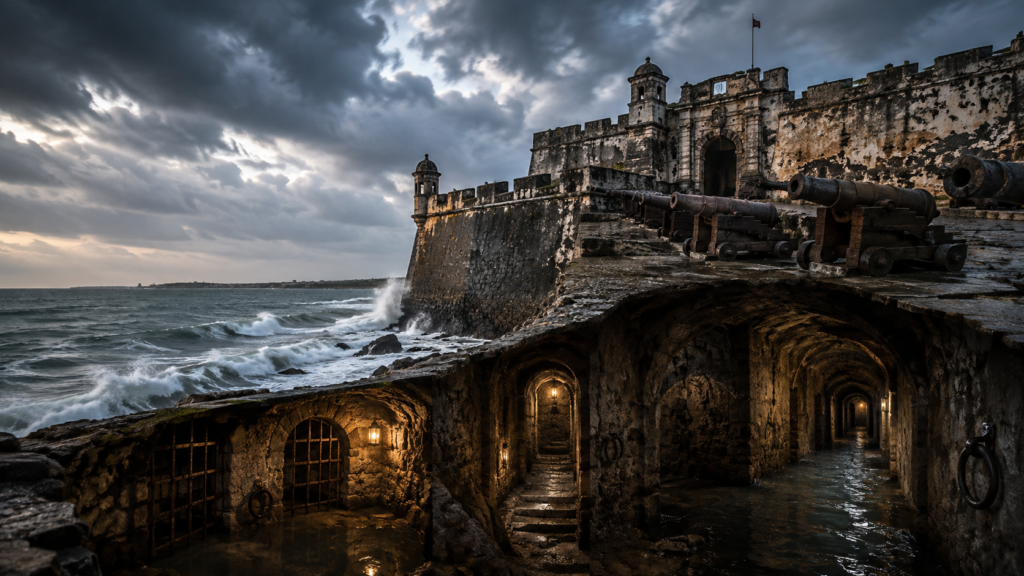
1 Dark Secret Behind Diu Fort’s Rich Past
Standing tall against the crashing waves of the Arabian Sea, Diu Fort is widely recognized as a triumph of Renaissance military architecture and coastal defense. However, beneath its massive stone walls lies an unsettling history that standard travel brochures rarely detail. While tourists admire its sweeping ocean views and rusted cannons, there is 1 dark secret behind Diu Fort’s rich past that reveals the sinister truth of colonial conquest: the hidden subterranean dungeons that served as a brutal, inescapable prison network during the height of Portuguese rule.
The Strategic Importance of Diu Fort :1 Dark Secret Behind Diu Fort’s Rich Past
To understand the darker side of the fortress, one must first look at why it was built. Situated off the southern coast of Gujarat’s Kathiawar peninsula, Diu Island occupied a crucial position along Arabian Sea trade routes during the 16th century.
- 1535 Treaty: Sultan Bahadur Shah of Gujarat permitted the Portuguese to construct the fortress in exchange for military protection against the Mughal Empire.
- Maritime Dominance: The fort allowed Portugal to strictly control trade, imposing high customs duties on merchant vessels passing through the Gulf of Khambhat.
- Impenetrable Defense: Surrounded by sea on three sides and protected by a deep moat cut into solid rock on the landward side, Diu Fort survived multiple sieges by Ottoman and Mughal forces.
Despite its grandeur, this strategic maritime powerhouse operated with a severe hand against those who resisted colonial rule.
1 Dark Secret Behind Diu Fort’s Rich Past: The Hidden Subterranean Dungeons :1 Dark Secret Behind Diu Fort’s Rich Past
The most chilling aspect of Diu Fort is not visible from its battlements. Hidden beneath the outer defensive walls is a sprawling network of dark, damp subterranean dungeons designed to silence political dissidents, local rebels, and prisoners of war.
+--------------------------------------------------------------------+
|                    SUBTERRANEAN DUNGEON LAYOUT                     |
+--------------------------------------------------------------------+
|  [Main Ramparts]  -->  [Moat Wall Entry]                           |
|                            |                                       |
|                            v                                       |
|                    [Unlit Stone Corridor]                          |
|                            |                                       |
|       +--------------------+--------------------+                  |
|       |                                         |                  |
|       v                                         v                  |
|  [Windowless Cells]                      [Tidal Chambers]          |
|  (Extreme humidity & confinement)        (Flooded at high tide)    |
+--------------------------------------------------------------------+
Psychological Isolation and Extreme Conditions :1 Dark Secret Behind Diu Fort’s Rich Past
The subterranean chambers were intentionally carved into the bedrock to ensure total isolation from the outside world.
- Zero Natural Light: Cells were constructed without windows, leaving captives in perpetual darkness.
- Suffocating Atmospheric Pressure: The low ceilings and lack of ventilation created a suffocating environment, exacerbated by high coastal humidity.
- Coastal Seepage: Seawater constantly seeped through the limestone walls, ensuring the floor remained flooded with cold saltwater.
The Tidal Punishment Chambers
Among the underground networks, the low-lying seaward cells served a sinister purpose. During high tide, ocean water poured into the lower levels through narrow vents. Prisoners kept in these lower chambers were forced to stand in chest-deep water for hours, battling hypothermia and exhaustion until the tide naturally receded.
Historical Impact: Life Inside the Colonial Prisons
The dungeons of Diu Fort were not merely short-term holding cells; they were utilized as permanent containment for those who posed a threat to the Portuguese administration.
| Feature | Surface Fortification | Underground Dungeons |
|---|---|---|
| Primary Purpose | Military Defense & Trade Control | Confinement & Interrogation |
| Light & Ventilation | Open Sea Breezes & Natural Sunlight | Pitch Black & Stagnant Air |
| Occupants | Portuguese Soldiers & Officers | Local Rebels, Traders, & Prisoners |
| Access | Grand Archways & Moat Bridges | Concealed Trapdoors & Stone Stairs |
Historical accounts from the Goa Inquisition and regional records indicate that political prisoners from across Portuguese India were routinely transferred to isolated outposts like Diu. The psychological toll of total darkness, combined with minimal provisions, meant that few survived long-term detention inside the fort’s subterranean depths.
Architectural Evidence Remaining Today :1 Dark Secret Behind Diu Fort’s Rich Past
Visitors to Diu Fort can still observe structural evidence of these historic confinement practices scattered throughout the complex.
Iron Ring Mounts and Stone Lockups
Deep within the interior corridors near the lighthouse base, heavy iron rings remain embedded in the solid rock walls. These served as tethering points for high-value captives.
Sealed Trapdoors and Narrow Vents
Walking along the perimeter walls, careful observers will notice square stone slabs flush with the ground. These covered the vertical shafts used to drop provisions—or prisoners—into the subterranean levels below without opening the main secure gates.
Preserving the Legacy of Diu’s Heritage
In 1961, Operation Vijay brought an end to over four centuries of Portuguese colonial presence in Diu, integrating the island into the Union of India. Today, the fortress stands as a protected monument under the Archaeological Survey of India.
While the upper ramparts offer breathtaking panoramic views of the ocean, the lower passages serve as a sober reminder of the sacrifices made during the region’s complex history. For history enthusiasts and travelers alike, exploring these stone corridors provides a complete picture of the fort—balancing its military brilliance with its dark history.
To explore official conservation efforts, visitor guidelines, and historical documentation for regional monuments, visit the official Archaeological Survey of India portal.
Key Takeaways
- Strategic Fortress: Built in 1535 through a treaty between Sultan Bahadur Shah and the Portuguese.
- The Hidden Secret: A dark underground dungeon network used for severe confinement and political control.
- Harsh Environments: Features include zero natural light, constant saltwater dampness, and tidal flooding.
- Modern Status: Preserved as a major historical site offering insight into India’s colonial maritime history.