
These 2 strange rules from the era of Portuguese Diu will completely change your perspective on India’s history. Click to uncover the shockers!
Thank you for reading this post, don't forget to subscribe!2 Strange Rules of Portuguese Diu That Will Shock You!
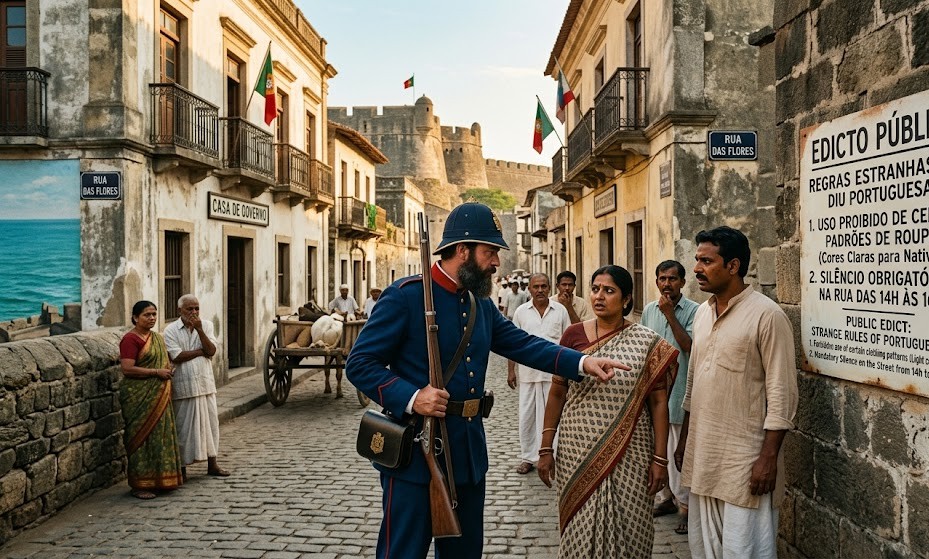
2 Strange Rules of Portuguese Diu That Will Shock You!
Portuguese Diu holds a fascinating, deeply complex place in history, leaving behind a legacy filled with eccentric laws and strictly enforced colonial regulations. While many travelers visit this coastal paradise today for its stunning beaches and massive fortresses, the historical reality of living under colonial rule involved compliance with some truly unexpected mandates. If you delve into the archives of this former enclave, you will quickly discover two incredibly strange rules of Portuguese Diu that governed daily life and will completely shock you.
To fully grasp how these regulations came to be, one must look at the unique geopolitical position the region held. For over four centuries, this tiny island outpost served as a critical naval choke point, meaning the governing authorities were often paranoid about security, cultural assimilation, and revenue collection.
The Hidden Social Rigidities of Portuguese Diu
When the colonial forces established their stronghold, they didn’t just build walls; they built an intricate web of social boundaries. The administration of Portuguese Diu felt a constant pressure to maintain absolute authority over a population that vastly outnumbered them. To achieve this, governors implemented laws that dictated everything from religious practices to what a person could wear in public.
2 Strange Rules of Portuguese Diu That Will Shock You!
For instance, archival records preserved by the National Archives of India (External DoFollow Link) show how strictly monitored the local populations were. While mainland India experienced its own shifts in governance, the isolated community here faced highly localized decrees that felt entirely disconnected from the rest of the subcontinent.
1. The Shocking Decorum and Attire Mandates
2 Strange Rules of Portuguese Diu That Will Shock You!
The first bizarre rule that dictated daily life involved strict regulations on public attire and social hierarchy. The rulers of Portuguese Diu were obsessed with maintaining visible distinctions between the colonial elite and the local citizens. Under specific 18th-century decrees, locals of certain castes and professions were outright forbidden from wearing specific luxury fabrics or donning footwear in the presence of colonial officials.
If a local merchant wished to enter the inner quarters of the fortress to conduct business, they had to adhere to a rigid dress code that stripped away symbols of local wealth. Breaking this rule resulted in heavy public fines or, worse, arbitrary imprisonment. It was a psychological tool used to ensure that the majesty of Portuguese Diu was never visually challenged by its residents.
Economic Strangulation and Maritime Monopolies :- 2 Strange Rules of Portuguese Diu That Will Shock You!
Beyond social control, the economic laws of the enclave were equally severe. As detailed in our comprehensive guide to Colonial Enclaves of Western India , controlling trade was the primary reason the port existed in the first place.
2. The Written Permit Cartaz System
2 Strange Rules of Portuguese Diu That Will Shock You!
The second strange rule involves the infamous trade monopolies, specifically the mandatory Cartaz (naval permit) system. Even after the initial golden age of the spice trade had shifted, the local authorities enforced a rule stating that no local fishing vessel or commercial dhow could leave the shores of Portuguese Diu without a costly, explicitly stamped written permit from the Governor’s office.
What makes this rule truly shocking is how granular it was: the permit didn’t just tax the voyage; it dictated the exact route, the specific items allowed on board, and even the maximum number of crew members. If a local fisherman was caught caught drifting off course due to the tide without the proper paperwork, the colonial navy had the legal right to confiscate the entire catch, seize the boat, and enslave the crew. This effectively paralyzed independent local commerce.
The Lasting Legacy of Portuguese Diu
These rigid frameworks remained active in varying degrees until the mid-20th century. The unique, isolated trajectory of Portuguese Diu finally came to an end in December 1961, when the Indian Armed Forces launched Operation Vijay, successfully liberating the territory and integrating it into the Indian Union.
For those researching this era further, the open-source history compiled on Wikipedia’s Portuguese India Page (External DoFollow Link) provides an excellent macro-view of the political shifts. Today, the strange rules are long gone, but the physical architecture and the echoes of these bizarre historic laws remain etched into the very stones of the island.
2 Strange Rules of Portuguese Diu That Will Shock You!
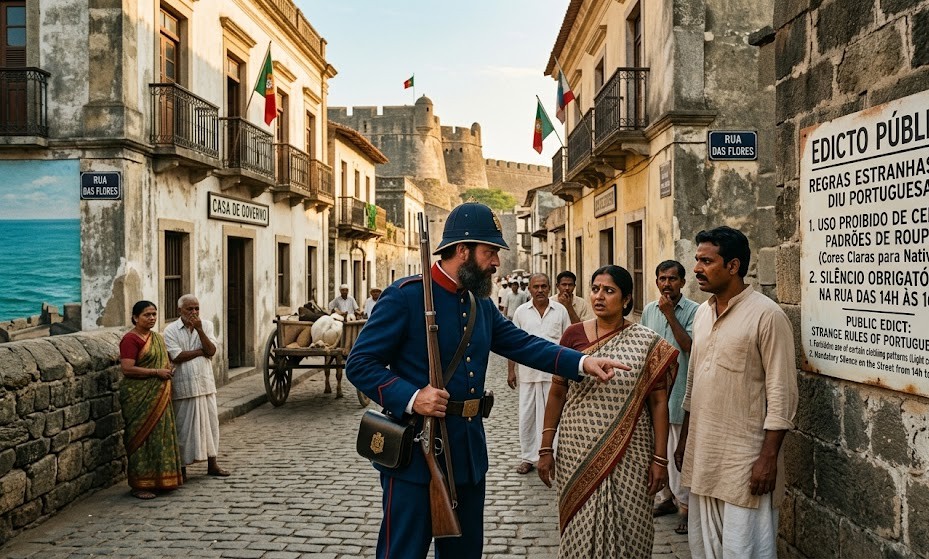
2 Strange Rules of Portuguese Diu That Will Shock You!1

Comments are closed.